Nuclear Fuel manufacturing is very critical and plays a vital role in nuclear fuel cycle. The stringent chemical, physical and metallurgical requirements of nuclear fuel need to engineered into the nuclear fuel during manufacturing. The physical characteristics also need to engineered based on the operation conditions of the nuclear fuels which are quite harsh and also varying from reactor to reactor.
The nuclear fuels during their operation are subjected to harsh operating conditions like temperatures which range up to 1700oC, high neutron flux environment which leads to physical and metallurgical changes.
At NFC, fuel is made for three types of Nuclear Reactors, namely Pressurised Heavy Water Reactor (PHWR), Boiling Water Reactor (BWR) and Fast Breeder Reactor (FBR).

PHWR fuel is manufactured from natural uranium dioxide. The raw material for the production of PHWR fuel is Magnesium Di-Uranate (MDU) or Uranium Ore Concentrate (UOC). MDU concentrate is obtained from the uranium mine and mill at Jaduguda, Jharkhand.
UOC is imported from various countries. MDU which contains about 55-65% 'U' or UOC is subjected to dissolution followed by specialized chemical treatment processes such as solvent extraction followed by precipitation of Ammonium Di-Uranate (ADU). Further steps of controlled heat treatment form sinterable Uranium dioxide (UO2) powder.
The UO2 Powder is further processed to high-density cylindrical pellets by various operations like pre-compaction, final compaction and sintering at high temperature (1700oC) in reducing atmosphere. The sintered pellets are then centre-less ground to desired dimensions.
-
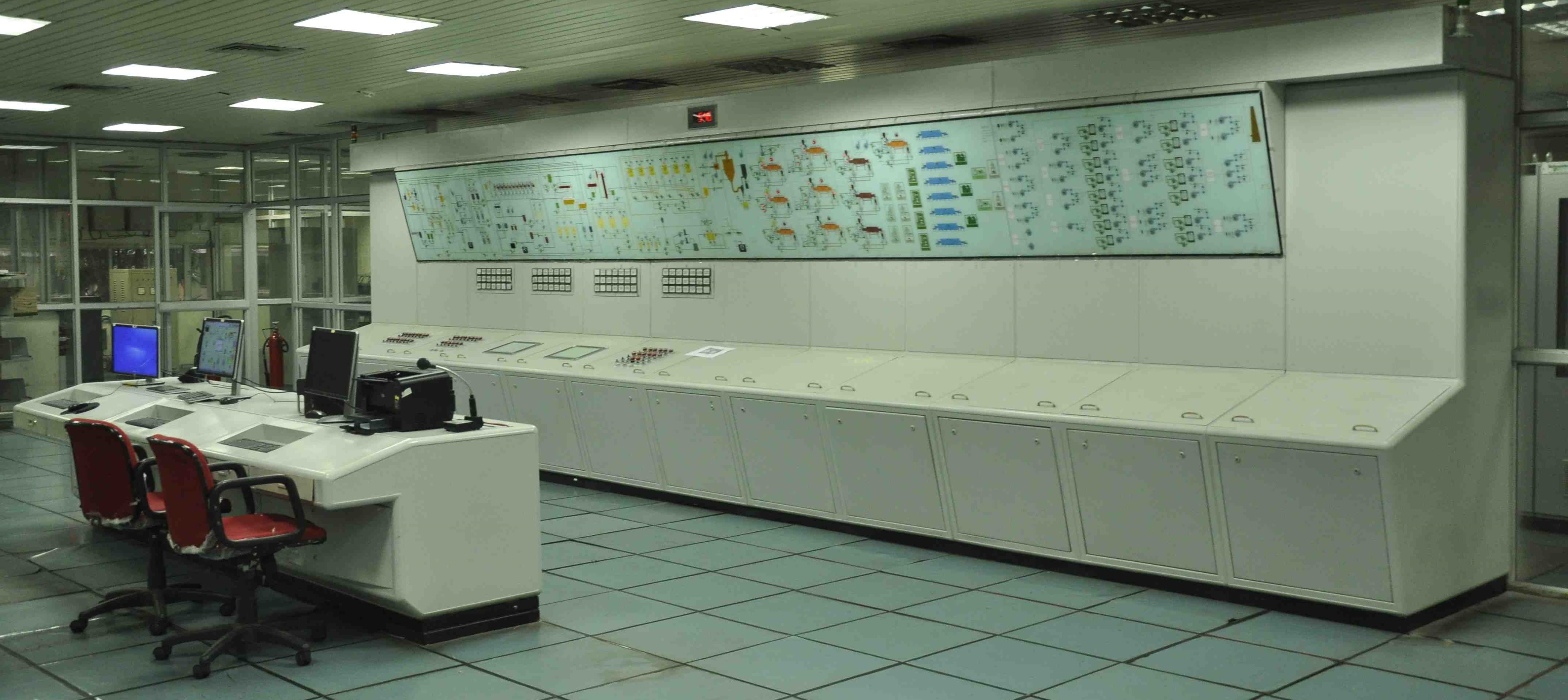 Process Control Room
 -
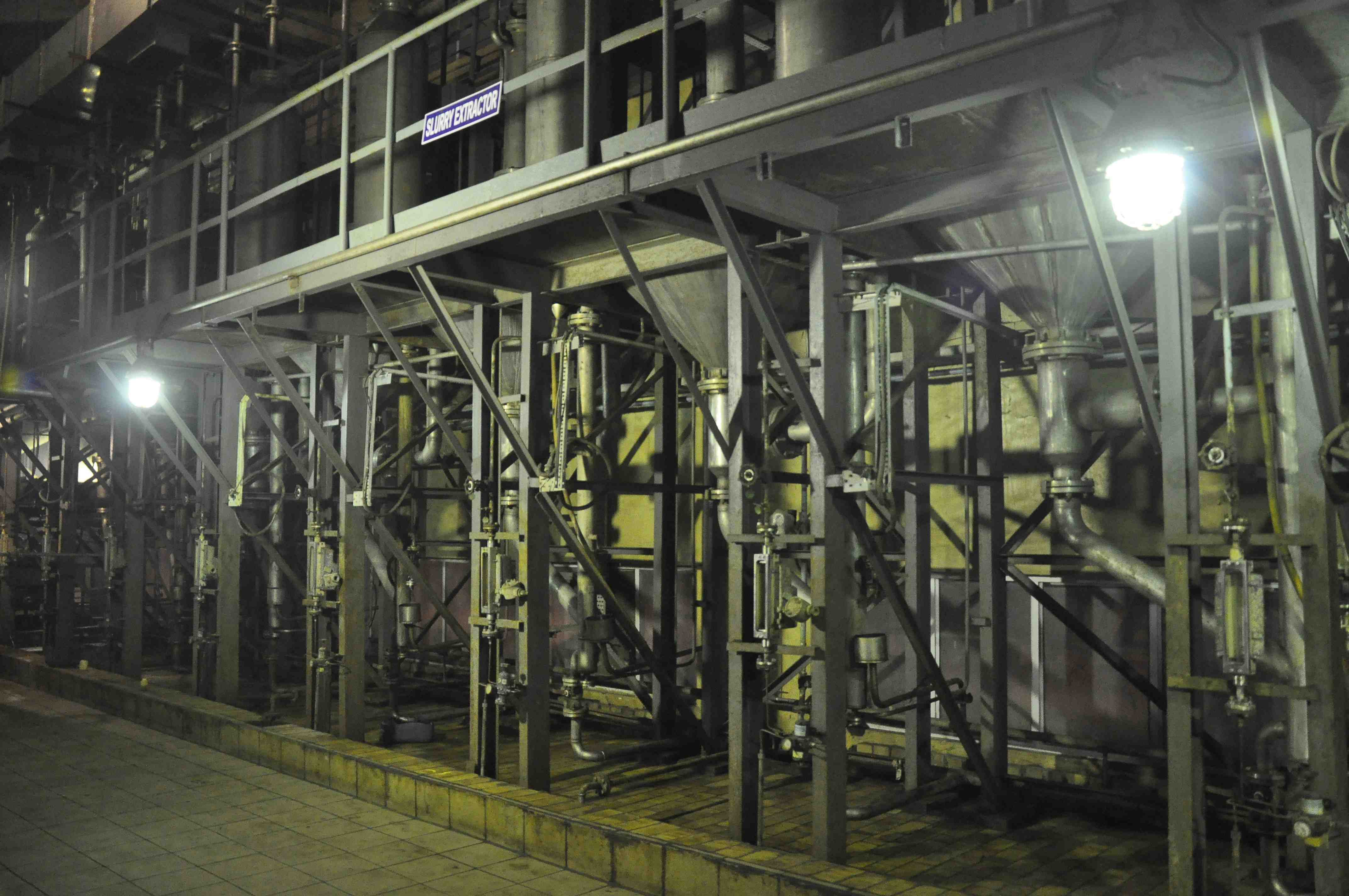 Slurry Extractor
 -
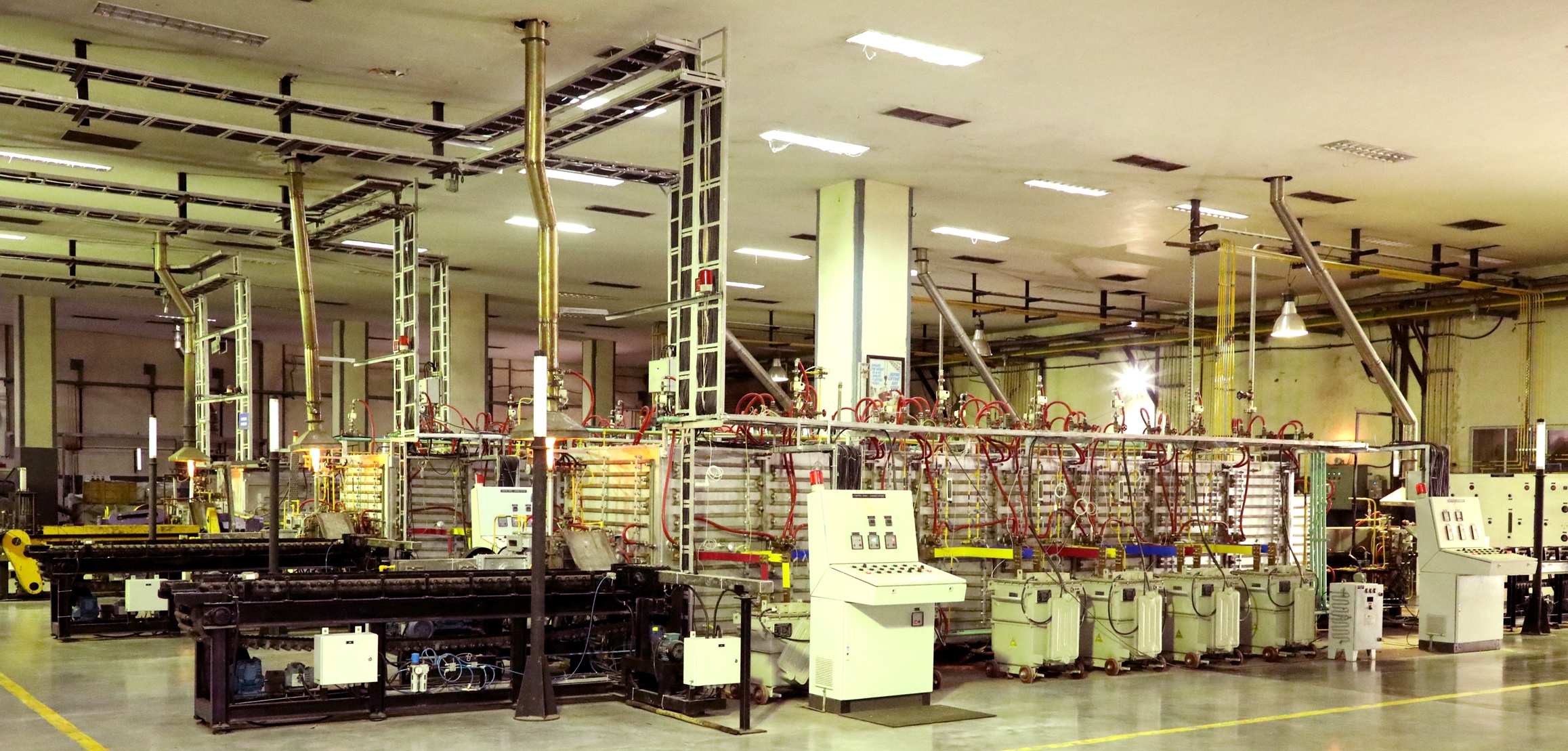 Sintering Furnace
The finished UO2 pellets are encapsulated in thin walled Zircaloy tubes, both ends of which are sealed by resistance welding. Appendages such as spacers and bearing pads are resistance welded on these elements and 19 or 37 such elements of specified configuration assembled together by welding them on to end plates at either end to form fuel assembly.
-
 Manufacturing of Fuel Assemblies
 -
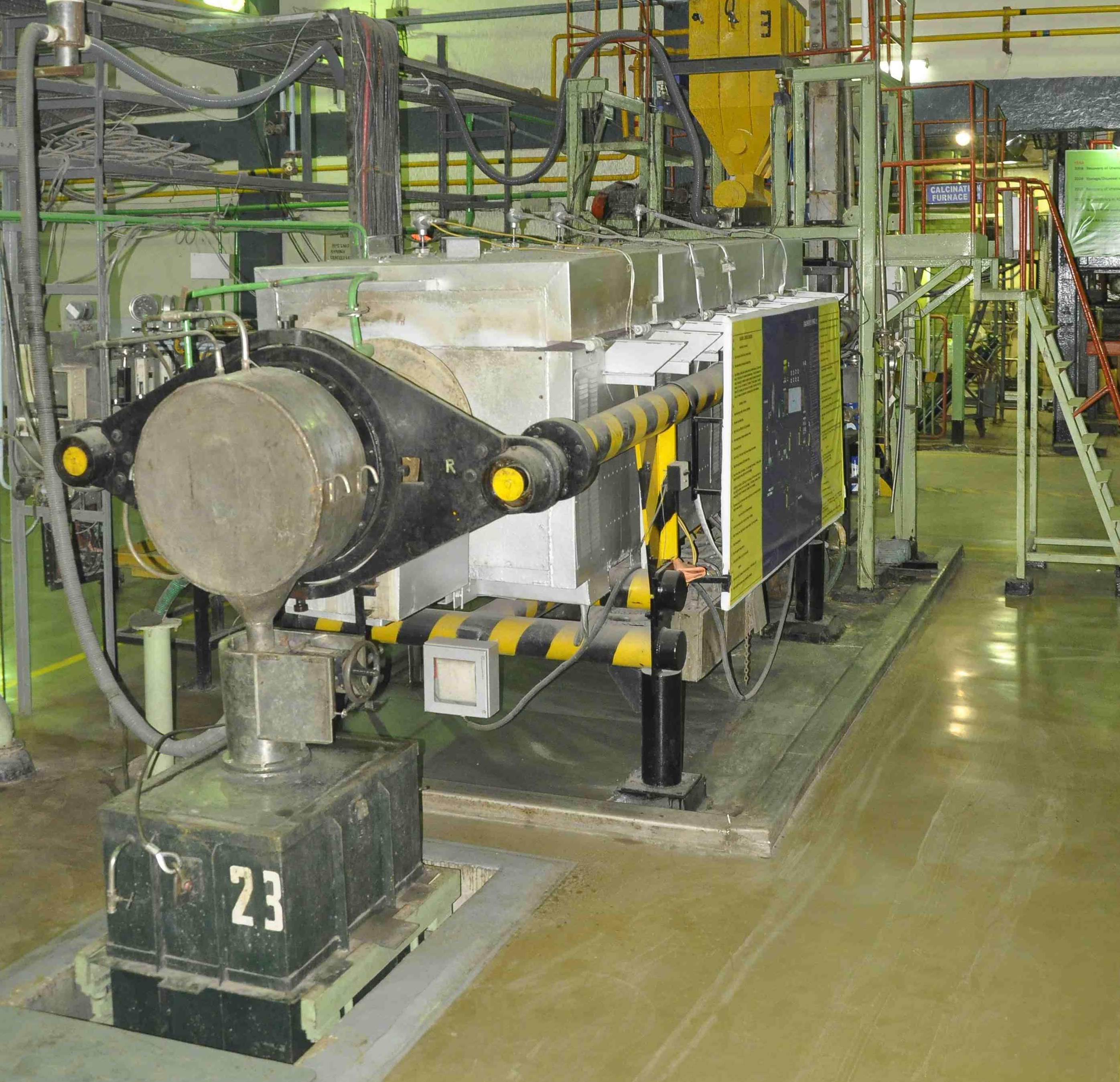 Rotary Furnace
19-element fuel assembly is designed for 220 MWe reactors and 37-element fuel assembly is designed for 540 MWe and 700 MWe reactors.
Cylindrical UO2 pellets of varying enrichments and chemical compositions imported from other countries are encapsulated in thin walled tubes of zirconium alloy, both ends of which are sealed by TIG welding. Elements with varying compositions are placed in a specified configuration such as 6x6 or 7x7 array along with spacer grids, stainless steel tie plates, zirconium alloy spacers and flow nozzles to form nuclear fuel assemblies.

NFC is also responsible for fabrication of core subassemblies for Indian Fast Breeder Reactors deployed under 2nd stage of Indian Nuclear Power Program. The facility at NFC presently caters to the requirements of core subassemblies for two reactors - 13 MW(e) Fast Breeder Test Reactor (FBTR) and 500 MW(e) Prototype Fast Breeder Reactor (PFBR).
NFC fabricated all the core subassemblies such as Fuel, Blanket, Nickel Reflector, Carrier and Special Assemblies for its initial core of FBTR in the beginning. Since then it is also engaged in continuously supplying annual requirements of Fuel and special subassemblies of FBTR. A typical FBTR fuel subassembly consists of 511 intricately machined components of 35 different types.
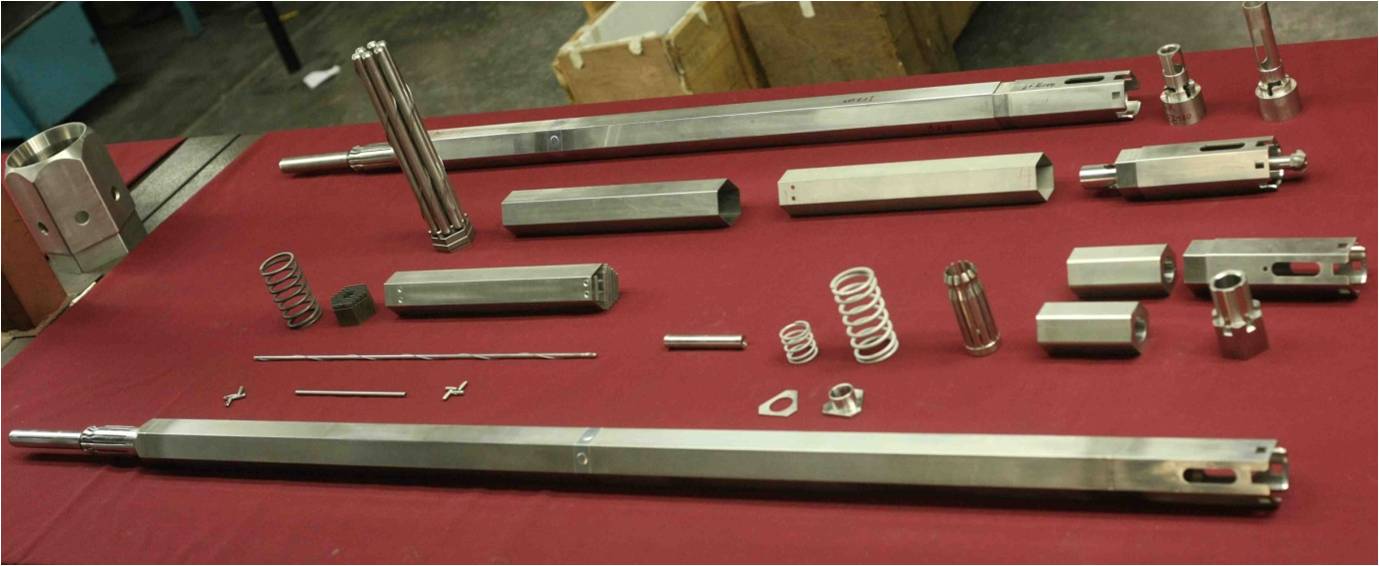
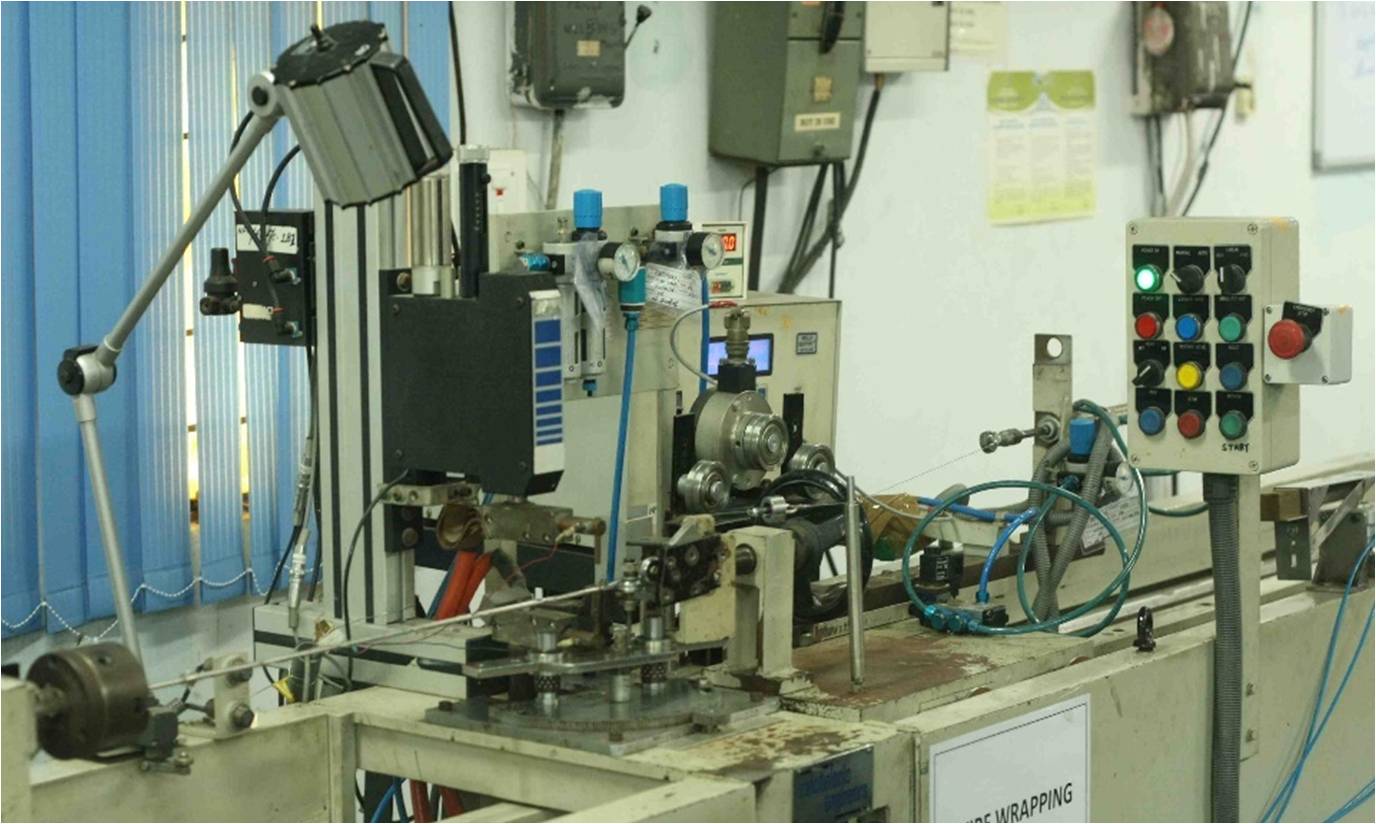
The Core subassemblies are hexagonal in shape with very thin wall special grade Stainless Steel (SS) tubes (circular and hexagonal) and precision SS components. These were fabricated with the know how developed in-house and equipment / fixtures built with indigenous capabilities. Pelletisation of the thorium oxide (ThO2) has been carried out for the first time on a large scale that involved considerable ingenuity and effort.
The fabrication of various FBTR core subassemblies involves unique operations like button forming and chrome plating on hexagonal tubes, crimping on clad tubes, bead forming on spacer wires, helical wire wrapping on pins etc. These operations are executed on special purpose machines which were also developed indigenously. The fabrication of FBTR fuel involves substantially high radioactivity, which in turn increases complications in manufacturing.
Deploying radiation protection lead shields at various process workstation help to overcome these challenges.
NFC fabricated and supplied core subassemblies like Fuel, Blanket, Control & Safety Rod, Diverse Safety Rod, Reflector, Inner Boron Carbide Shielding, Diluent, Purger, Source and Instrumented Central Subassemblies for initial core of PFBR. A typical PFBR Fuel subassembly consists of 1541 intricately machined components of more than 35 different types. This also involved supply of about 60,000 crimped tubes and 2.5 lakh precision fuel pin components fabricated in-house / outsourced meeting the stringent specifications involving Quality Assurance team of NFC and Quality Surveillance team of NPCIL / BHAVINI. The Core subassemblies are hexagonal in shape and are 4.5m long. The fabrication processes of most of the machining components were developed and outsourced due to bulk quantity requirements. The various equipment, fixtures and radiation shields were developed indigenously for unique operations like Spacer Wire Bead Forming, Wire Wrapping, Automatic TIG Welding, Button Forming, Robotic fuel pin assembly etc. NFC has also developed Automatic autogenous TIG welding technique for welding of very thin walled Fuel clad tubes and Hexagonal wrappers. The complexity of fuel subassemblies involves handling and manufacturing of substantially high radioactive fuel pins, which were overcome by deploying special automation techniques and (composite) radiation shields for protection against gamma and neutron radiation as per regulatory requirements and safety standards. In addition to this, a special fuel assembly shop / facility called has been established close to reactor site at Kalpakkam.
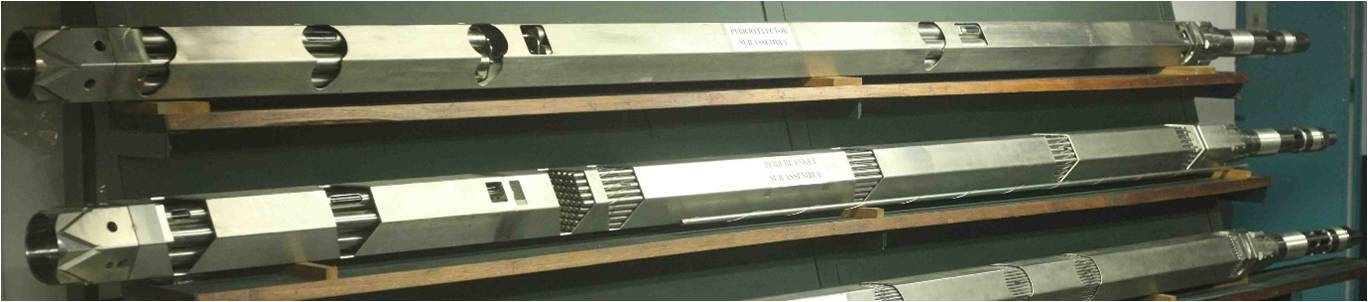
In addition to this, NFC is also involved in planning and setting up of nuclear fuel fabrication facilities for fabrication of various types of pins and subassemblies required for annual reloads of PFBR and other FBRs.
Fabrication of Fuel for FBTR & PFBR with In-house / indigenous made equipments & fixture is very excellent example of India's self reliance and Make in India policy.